


Zoya:Where Love Begins
4.8379.00 Reviews
App Specs
- Version
- 1.2.3
- Updated On
- License
- Free
- Downloads
- 50,000+
- Developer
- itzilaDev
- Categories
- Entertainment
- Platform
- Android
Screenshots

 Analysis by AppCompare
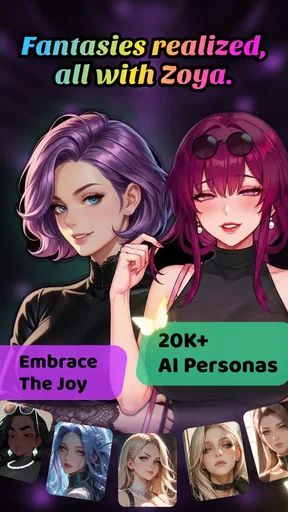
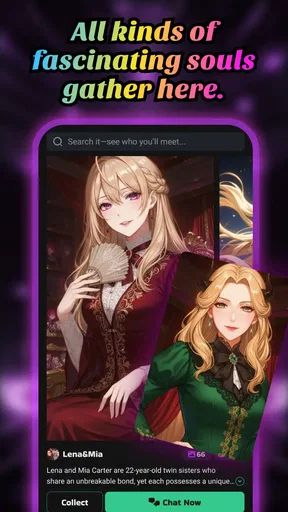
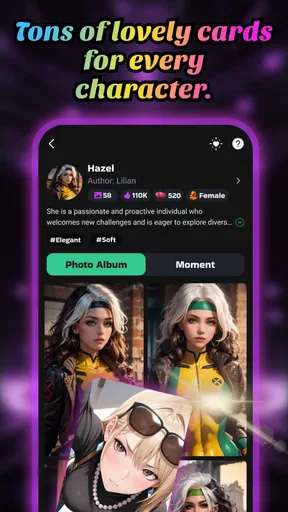
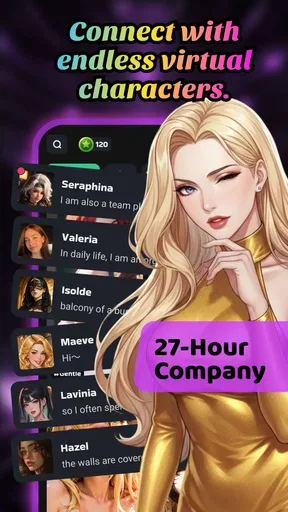
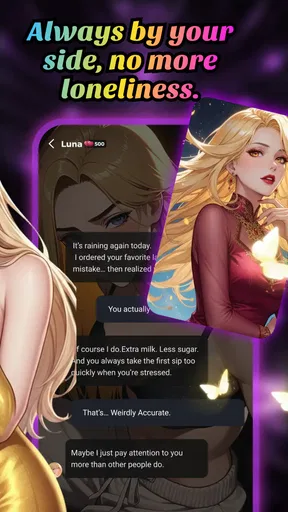
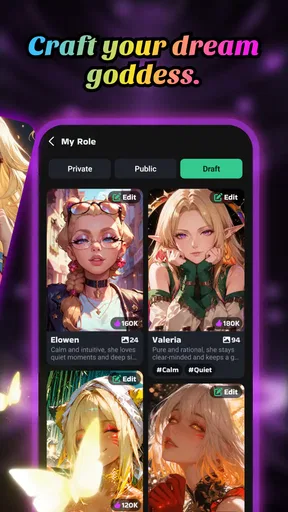
Zoya: Where Love Begins is an entertainment app built around fantasy AI roleplay and virtual companion dialogue. I approached it less like a conventional game and more like an interactive conversation: the appeal comes from choosing how I want an exchange to feel, then seeing how the companion responds. That makes the first few minutes important. If you expect levels, combat, puzzles, or a clearly defined win condition, this will feel unusual. If you enjoy character-led chats and imaginative scenarios, the format is much easier to understand.
The app is made by itzilaDev and is available free of charge, with optional purchases ranging from $3.49 to $54.99 per item. It carries a Mature 17+ age rating, which is a useful signal that this is not designed as a general family chat toy. I would treat the rating seriously, especially if the device is shared or a younger person could access it. The current version is 1.2.3, and it runs on Android 7.0 or later.
What the first conversation feels like
My first useful adjustment was to stop treating the opening exchange as a test that I had to pass. Zoya works better when I give the conversation a little direction. A short message such as “I want a calm fantasy scene after a difficult day” gives the roleplay somewhere to go, while a vague “hello” can leave the interaction feeling less distinctive. The experience depends heavily on the quality and specificity of the prompt I bring to it.
The fantasy setting is the central attraction. I can approach a chat as light storytelling, romantic roleplay, character improvisation, or simply a way to explore dialogue in a fictional world. That flexibility is more interesting than a fixed script, but it also means the app does not provide the same predictable progression as a traditional story game. There is no obvious need to collect items or master controls before I can enjoy it. The meaningful activity is conversation itself.
That makes this a comfortable choice for someone who wants a low-pressure entertainment break. I can use it for a few minutes while waiting for an appointment, or stay longer when I feel like developing a scene. The trade-off is that the value is subjective. A person who wants a polished visual novel with authored chapters may find the open-ended format too loose, while someone who likes improvisation may appreciate not being forced down one route.
The app’s 4.8 average from around 3.1 thousand ratings suggests that many people respond well to its basic idea. It has passed 50 thousand installs, so it is not an obscure experiment with no audience. Still, those figures should not replace personal expectations: a strong rating cannot guarantee that every conversation style will suit me, because AI roleplay is especially sensitive to tone, patience, and the kind of prompts I write.
Who will get the most from it
I would recommend it first to adults who enjoy character dialogue but do not necessarily want the rules and repetition of a full game. It can also suit writers looking for a quick way to test a fictional mood, provided they are comfortable treating the responses as improvisation rather than finished prose. Someone who likes asking “what if?” questions may find more to do here than someone searching for a single, carefully authored romance plot.
Worth Reading Before You Choose

EA SPORTS FC Mobile 26 Is a Bigger Football Game, but It Takes Time

Flipboard Shows What News Apps Must Do Beyond the Feed

Switching to Android Auto Means Rethinking Your Driving Routine

Google Calendar Makes a Crowded Week Easier to Manage

Ludo King Makes the Most of the Minutes Between Plans

Baby Panda World Brings Quick Play to Modern Phones, but Its Game Library Feels Busy
I would skip it if I wanted a competitive system, a large exploration map, or a reliable story ending. It is also a poor fit for anyone who dislikes conversational uncertainty. The companion may not always take a scene in the direction I imagined, and the pleasure comes partly from steering it back rather than expecting perfect control. That distinction is worth understanding before spending time or money in the app.
Getting started without overthinking the setup
After installing, I would begin with a clear intention instead of trying to discover every possibility at once. Decide whether the first session is for casual conversation, romantic fantasy, collaborative storytelling, or a particular emotional tone. Then write one message that includes the setting and the kind of response you want. For example, I might describe a quiet meeting in a magical library and ask for a warm, curious exchange rather than immediately asking the companion to define the entire world.
This small approach makes the first interaction less confusing because it gives the AI two anchors: where the scene is happening and how I want it to feel. I found that combining both is more useful than sending a long biography or a list of demands. A compact opening leaves room for the dialogue to develop, while still preventing the conversation from starting in a completely empty space.
It is also sensible to read the age context before handing the phone to anyone else. The Mature 17+ classification places Zoya firmly in an adult-oriented entertainment category. I would not treat it like a children’s chatbot, a school tool, or an ordinary messaging app. If several people use the same device, keeping the app within the intended user’s control is a basic but important part of the setup.
The free entry point is helpful because I can judge the conversation style before deciding whether it deserves further spending. I would use the free experience to answer three practical questions: Do I enjoy the tone of the replies? Can I guide a scene without constant frustration? Does the app fit the amount of privacy and personal attention I am comfortable giving to a virtual companion? Those answers matter more than an attractive concept alone.
How to reach the first meaningful result
For me, the first successful action is not simply receiving a reply. It is getting a short exchange to maintain a consistent mood across several turns. The most reliable way to reach that point is to make the opening request concrete, respond to what the companion actually says, and correct the direction politely when needed. Instead of restarting whenever a reply is imperfect, I can say, “Keep the scene gentle and focus on the conversation,” or “Stay in the fantasy setting, but make the character more cautious.”
This creates a practical three-step workflow. First, establish the scene. Second, react to one detail in the response. Third, add one small adjustment. I prefer this to writing a huge instruction block because it lets me see what the app handles well. It also makes the conversation feel more natural and gives me a clearer sense of the companion’s style.
A useful everyday scenario would be using Zoya after work when I want a creative distraction but do not have the energy to start a full game. I could open with a brief fantasy meeting, spend a few turns building the exchange, and then end the session at a natural pause. The benefit is immediacy: I do not need to remember complicated controls or prepare a campaign. The limitation is that the experience may feel disposable if I do not give the scene enough personal direction.
Another less obvious use is rehearsal for tone. I can try writing a difficult fictional conversation—an apology, a cautious first meeting, or a disagreement—and observe how different wording changes the response. I would not treat the result as professional advice or a substitute for a real person, but it can help me notice whether my prompt sounds warm, abrupt, vague, or overly controlling. That makes the app more useful than a simple stream of idle fantasy dialogue.
Where new users may become confused
The biggest confusion is expecting the app to behave like a normal game. The word “roleplay” can suggest missions, character statistics, or a visible progression system. Here, the conversation is the activity, so progress is measured by how much the scene develops and how well the replies match the direction I provide. If I keep waiting for a conventional objective to appear, I may conclude too quickly that the app has little to offer.
A second source of friction is assuming that the virtual companion will remember every detail exactly as I do. In an open conversation, continuity can require active reminders. If a particular relationship, setting, or personality trait matters, I would restate it briefly when the dialogue starts drifting. That is not as effortless as reading a fixed script, but it is part of the trade-off for having a more flexible exchange.
It is also easy to send prompts that are too broad. “Tell me a story” gives the app a large empty space to fill, while “continue our evening conversation in the castle garden, keeping the mood playful but not rushed” gives it a much more useful frame. The second style does not guarantee a perfect answer, but it gives me more control without turning the interaction into a technical exercise.
Another practical question is whether free access is enough. I would not decide based on the price range alone. First, I would identify the exact part of the experience I value: longer sessions, a preferred style of interaction, or simply the novelty of talking with a fantasy companion. If the free experience already feels repetitive or emotionally unconvincing, paying more is unlikely to solve the underlying mismatch. Optional purchases should follow genuine use, not pressure to unlock an experience I have not yet enjoyed.
Making the dialogue more rewarding over time
Once the first scene works, I would create a small personal routine rather than trying to use the app randomly. One session could focus on world-building, another on character dialogue, and another on a scene with a clear emotional change. This gives each visit a purpose and helps me judge whether the app is still entertaining after the initial novelty fades.
A particularly effective technique is to introduce only one new element at a time. Adding a new location, a new character, a conflict, and a dramatic twist in one message can make the exchange feel crowded. Introducing a single change gives the companion more room to respond and gives me a better chance of noticing what actually improves the scene. This is a small workflow choice, but it makes the open-ended format feel less random.
I would also keep my expectations realistic about emotional companionship. Zoya can provide responsive fictional dialogue, which may feel comforting or engaging, but it is still an app in the entertainment category. I would use it for imagination and conversation practice, not as a replacement for trusted friends, professional support, or important real-world decisions. That boundary lets me enjoy the premise without asking the app to do a job it was not designed to do.
Compared with a standard chatbot, the fantasy roleplay framing gives my prompts a stronger imaginative direction. Compared with a visual novel, it offers more freedom but less authorial certainty. Compared with social messaging, it removes the pressure of waiting for a real person, while also lacking the genuine unpredictability and mutual investment of a human relationship. Zoya sits between those alternatives, and its best audience is comfortable with that middle ground.
My recommendation after using it
I see Zoya: Where Love Begins as a focused entertainment app for adults who want fantasy conversation rather than a conventional game campaign. Its strongest quality is accessibility: I can begin with a simple scene and shape the experience through ordinary language. The most important skill is not learning a complicated interface, but learning how to give the dialogue enough context to become specific.
There is friction. Open-ended AI roleplay can wander, continuity may need reminders, and the experience will not satisfy people who want fixed chapters or measurable progression. The Mature 17+ rating also means I would be selective about who uses it and where it is installed. Those are meaningful considerations, not minor footnotes.
Still, I think the free starting point makes it easy to test honestly. I would install it, choose one clear fantasy scenario, and spend a short session seeing whether the conversation can hold a consistent tone. If that first exchange becomes enjoyable without constant correction, the app has a good chance of becoming a pleasant creative break. If I want authored storytelling, multiplayer interaction, or a structured game loop, I would choose a different kind of entertainment instead.
My bottom line: Zoya is worth trying when you want to talk through a fictional moment, not when you are looking for a traditional game to complete. Used with clear expectations and sensible boundaries, it offers an approachable way to experiment with virtual companion dialogue and fantasy roleplay. The first meaningful success comes from treating the conversation as collaborative improvisation, giving the scene a little direction, and allowing the exchange to develop one response at a time.
Pros
- Warm
- emotionally driven story with appealing romantic themes.
- Simple controls make it easy to pick up and play.
- Character interactions create a personal
- engaging experience.
- Suitable for short sessions thanks to its accessible gameplay.
- Attractive presentation complements the game’s gentle atmosphere.
Cons
- Some story moments may feel predictable to experienced players.
- Progress can become repetitive after extended play sessions.
- Certain content may appeal mainly to fans of romance-focused games.
- Limited challenge may disappoint players seeking complex gameplay.
- Performance and loading times can vary across older devices.
FAQs for Zoya:Where Love Begins
What is Zoya: Where Love Begins about?
Zoya: Where Love Begins is an interactive romance story game centered on relationships, emotional choices, and personal discovery. You follow the main character through romantic situations and dialogue-based scenes, making decisions that can influence how other characters respond. The experience is designed for players who enjoy visual-novel storytelling, character development, and branching relationship paths rather than fast-paced action or traditional puzzle gameplay.
Is Zoya: Where Love Begins free to download and play?
The game can generally be downloaded without an initial purchase, but players should expect optional in-app purchases or other limitations depending on the version available for their device. Some story chapters, premium dialogue choices, outfits, energy, or special items may require payment. Before downloading, it is worth checking the store listing for the current pricing model and reviewing purchase settings, especially if children may use the device.
Do my choices affect the story and romantic relationships?
Yes, choices are an important part of the experience. Conversations, reactions, and decisions may change the way characters perceive the protagonist and can influence romantic progress or later scenes. However, not every choice necessarily creates a completely different storyline; some decisions may mainly alter dialogue, rewards, or relationship points. Players who want to explore every outcome may need to replay chapters or use more than one save path.
Does Zoya: Where Love Begins require an internet connection?
An internet connection may be needed for downloading the game, loading story content, synchronizing progress, receiving updates, and accessing advertisements or in-app purchases. Offline availability can vary by device and by which chapters have already been downloaded. For the smoothest experience, play over a stable Wi-Fi or mobile connection and make sure the application is updated, since connection problems may prevent scenes or rewards from loading correctly.
Is Zoya: Where Love Begins suitable for all ages?
The game is aimed at players who enjoy romance-focused storytelling and may include mature themes, flirtatious dialogue, emotional conflict, or situations that are not appropriate for young children. The exact rating and content can differ between Android and iOS listings or after updates. Parents should check the official age rating, read the store description, and consider enabling parental controls before allowing younger users to download or make purchases.


